Early dental care is very important for children. Looking after your child’s teeth from a young age helps prevent cavities, gum problems, and other dental issues before they become serious. Healthy teeth also support proper chewing, clear speech, and normal jaw development as children grow, and good habits like brushing twice a day can last a lifetime.
However, many families worry about the cost of dental care. Regular dental visits, X-rays, and treatments can sometimes feel expensive, especially when managing other household expenses. Because of this, some families delay dental visits, which may lead to bigger dental problems later.
To support families, the Australian Government introduced the Child Dental Benefits Schedule (CDBS). This program helps eligible children receive dental care through Medicare, covering up to $1,158 in benefits over two consecutive calendar years. This blog explains how the CDBS works, who is eligible, what treatments are covered, and how families can use it when visiting a dental clinic such as Eve Dental Centre.
What Is the Child Dental Benefits Schedule (CDBS)?
The Child Dental Benefits Schedule (CDBS) is a program funded by the Australian Government through Medicare that helps eligible children receive basic dental care. Under this scheme, children can receive up to $1,158 in dental benefits over two consecutive calendar years for preventive and essential dental treatments.
The CDBS is available for children whose families receive certain government payments, such as Family Tax Benefit Part A, Parenting Payment, Youth Allowance, or Carer Payment, and who are eligible for Medicare. The program helps make dental care more affordable and encourages regular check-ups to detect problems early.
The CDBS mainly supports preventive and essential dental services, including:
- Dental check-ups
- Dental X-rays
- Professional teeth cleaning
- Fissure sealants
- Fillings for cavities
- Root canal treatment
- Tooth extractions when required
Who Can Use the Child Dental Benefits Schedule?
The Child Dental Benefits Schedule is available to children who meet certain eligibility requirements. Understanding these requirements can help parents determine whether their child qualifies for the program.
Simple Eligibility Checklist:
- The child is aged between 0 and 17 years for at least one day during the calendar year.
- The child is eligible for Medicare.
- The parent, guardian, or child receives an eligible government payment at least once during the year. This may include payments such as Family Tax Benefit Part A, Parenting Payment, Youth Allowance, or Carer Payment.
How to Confirm Eligibility:
- Log into your myGov account linked to Medicare
- Call Medicare on 132 011
- Ask your dental clinic to check eligibility before the appointment
Checking eligibility before booking a dental visit helps parents understand how much of the benefit is available for their child’s dental care.
Do Parents Need to Apply for the CDBS?
Parents do not need to apply for the Child Dental Benefits Schedule (CDBS) because the process is automatic. Services Australia checks eligibility each year using Medicare records and government payment information, and families are usually notified by mail or through their myGov account. If parents believe their child may be eligible but have not received a notification, they can still check the eligibility themselves.
Parents can confirm eligibility by:
- Logging into myGov and viewing the Child Dental Benefits Schedule section
- Calling Medicare on 132 011
- Asking their dental clinic, such as Eve Dental Centre, to check the benefit before the appointment using Medicare details
What Dental Treatments Are Covered Under CDBS?
The Child Dental Benefits Schedule covers a range of basic dental services that help maintain healthy teeth and treat dental problems early.
-
Dental Check-ups
Dental check-ups allow the dentist to examine your child’s teeth, gums, and mouth. During the visit, the dentist looks for early signs of tooth decay, gum problems, or bite issues. Regular check-ups help detect dental problems before they become serious.
-
Dental X-rays
Dental X-rays help dentists see areas of the teeth that are not visible during a normal examination. They allow the dentist to check between teeth, inside the tooth structure, and below the gums. X-rays use very low radiation and are only taken when necessary.
-
Teeth Cleaning
Professional scale and polish cleaning removes plaque and tartar that cannot be removed with regular brushing. After cleaning, the teeth are polished to create a smooth surface that helps prevent plaque from building up again.
-
Fillings for Cavities
If a child develops a cavity, the dentist may recommend a filling. During this treatment, the decayed part of the tooth is removed and replaced with a dental filling material. This restores the tooth and prevents further damage.
-
Fissure Sealants
Fissure sealants are thin protective coatings applied to the chewing surfaces of the back teeth, also called molars. These teeth have small grooves where food and bacteria can easily become trapped. Sealants help block these grooves and reduce the risk of tooth decay.
-
Tooth Extractions
Sometimes a tooth may be severely damaged, infected, or causing crowding problems. In these situations, the dentist may recommend removing the tooth. Tooth extractions are usually quick and help prevent further dental complications.
Understanding the Two-Year Benefit Limit
Each eligible child can receive up to $1,158 in dental benefits over two consecutive calendar years. For example, if your child uses $300 in benefits during a dental visit in 2026, the remaining $858 can still be used in 2027 for other covered treatments. Once the two-year period ends, the benefit may reset if the child remains eligible for the program.
What Is Not Covered by the Child Dental Benefits Schedule?
While the CDBS covers many important dental services, some treatments are not included.
-
Orthodontic Treatment
Orthodontic treatments such as braces or clear aligners are not covered under the Child Dental Benefits Schedule. These treatments are usually considered specialised or long-term dental care.
-
Cosmetic Dental Procedures
Cosmetic dental treatments, such as teeth whitening or cosmetic veneers, are also not included in the scheme. These treatments are usually performed to improve the appearance of teeth rather than to treat dental health problems.
-
Dental Treatment in Hospitals
Dental treatments performed in hospitals, especially procedures requiring general anaesthesia, are not covered by the CDBS. These treatments may be funded through other medical programs instead.
What to Expect Before, During, and After Your Child’s Dental Visit
Understanding what happens during a dental visit can help parents and children feel more comfortable.
-
Before the Appointment
Before visiting the dental clinic, parents should check their child’s CDBS eligibility and remaining balance. This information can be found through the myGov Medicare account or by calling Medicare. Parents should also confirm that the chosen dental clinic accepts the Child Dental Benefits Schedule.
-
During the Appointment
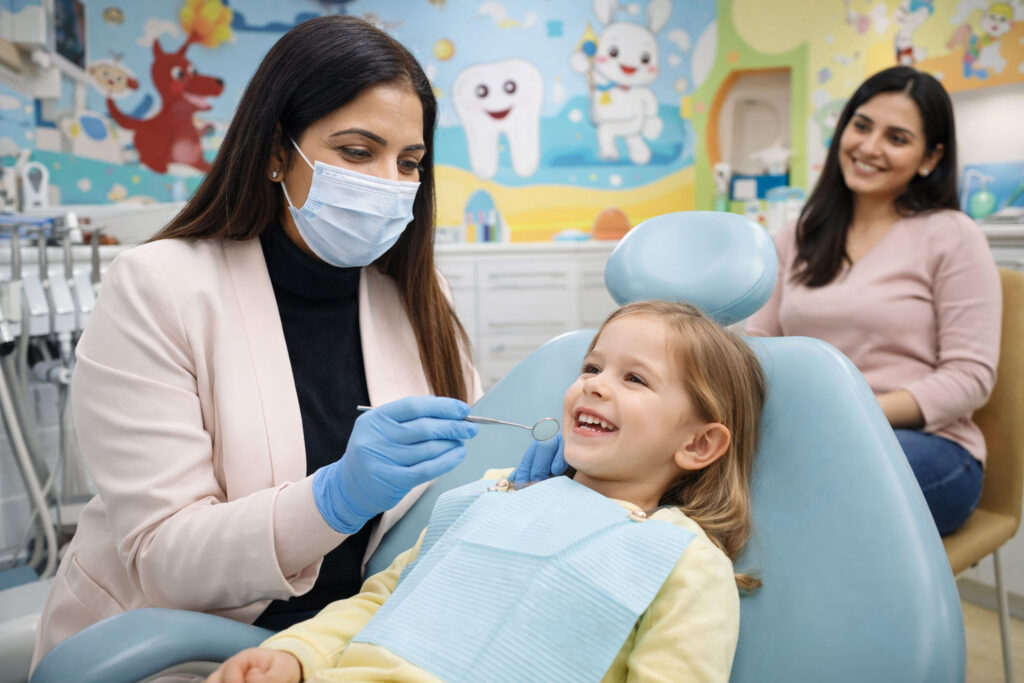
During the visit, the dental team will explain the recommended treatment and any associated costs. Parents will be asked to sign a consent form before treatment begins. This form allows the clinic to claim the treatment cost from Medicare under the CDBS.
-
After the Appointment
If the clinic bulk bills the service, parents may not need to pay anything because the treatment cost is claimed directly through Medicare. If the clinic does not bulk bill, parents may need to pay the treatment cost first and then claim the benefit from Medicare through myGov, the Medicare app, or a service centre.
Can CDBS Be Used With Private Health Insurance?
The Child Dental Benefits Schedule and private health insurance cannot be used together for the same dental treatment. Families must choose one option for the claim. In some cases, the CDBS may provide better coverage for basic treatments, while private health insurance may cover other services. Parents can speak with their dentist or health fund to decide which option offers the best value for their family.
Why Understanding CDBS Helps Parents Make Better Dental Decisions
Learning about the Child Dental Benefits Schedule can help parents make confident decisions about their child’s dental care.
First, the program reduces financial stress by helping families cover the cost of essential dental treatments. Knowing that funding is available allows parents to plan dental visits without worrying about unexpected costs.
Second, the scheme encourages regular dental check-ups, which help dentists identify problems early. Early treatment often prevents more complex dental procedures later.
Finally, the program supports preventive dental care, which is one of the best ways to protect children’s teeth. Preventive treatments such as cleaning, fluoride applications, and fissure sealants can reduce the risk of cavities and support healthy smiles.
Final Thoughts: Supporting Children’s Dental Health from an Early Age
Good dental habits begin during childhood. Regular brushing, healthy eating, and routine dental visits help children maintain strong teeth and healthy gums as they grow. Programs like the Child Dental Benefits Schedule make dental care more accessible for many families across Australia.
Regular dental visits every six months help dentists monitor children’s oral health and provide early treatment if needed. Clinics such as Eve Dental Centre accept the Child Dental Benefits Schedule and can guide families on using their child’s dental benefits to support healthy, long-lasting smiles. Contact us today to learn more or to book your child’s dental appointment.
FAQs – Child Dental Benefits Schedule
- What age does the Child Dental Benefits Schedule cover?
The Child Dental Benefits Schedule covers children aged 0 to 17 years who meet the eligibility requirements. - How much does the Child Dental Benefits Schedule cover?
The scheme provides up to $1,158 in dental benefits over two consecutive calendar years for eligible children. - Do all dental clinics accept the Child Dental Benefits Schedule?
Not all dental clinics accept the CDBS. Parents should contact the clinic before booking to confirm that the clinic participates in the program. - How can parents check their child’s CDBS balance?
Parents can check their child’s CDBS balance by logging into their myGov account linked to Medicare, calling Medicare on 132 011, or asking their dental clinic to check the balance before the appointment.