
A dental emergency can happen without warning, whether it is a sports accident, a cracked tooth, or an infection that spreads quickly, and the steps you take in the first few minutes can ease your pain, limit the damage, and sometimes save a tooth. This guide explains what to do when a dental emergency happens, which symptoms need urgent attention, how to manage common problems safely at home, when to go to hospital instead, and how an emergency dentist in Narre Warren, such as Eve Dental Centre, can assess and treat your problem promptly.
What Should You Do When a Dental Emergency Happens?
The first step is to stay calm and take a moment to check what is happening, such as whether you have severe pain, bleeding, swelling, an injury to your face or mouth, or a visibly damaged tooth. If any of these are present, it is best to call an emergency dentist as soon as possible, because dental problems rarely fix themselves, and waiting can allow an infection to spread, a crack to deepen, or a knocked-out tooth to lose its chance of being saved.
Common Dental Emergencies That Need Prompt Attention
-
Severe Toothache
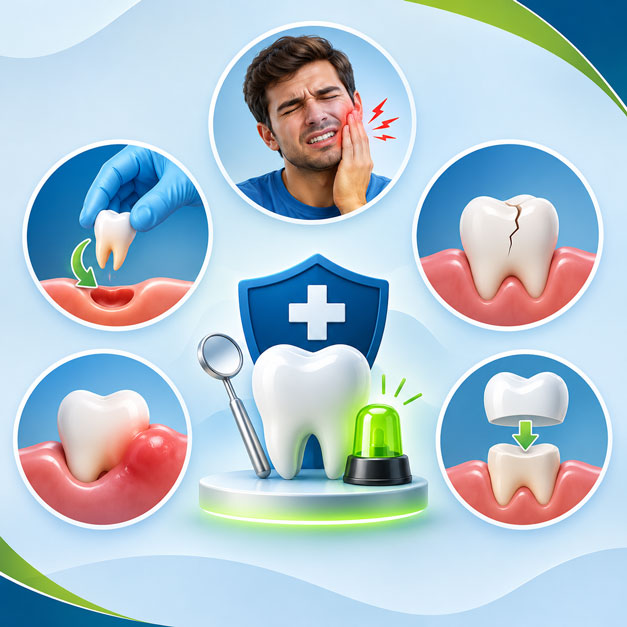
Sudden or ongoing tooth pain is a warning sign that often points to deep decay, infection, a cracked tooth, or an injury. Until you are seen, you can rinse your mouth with warm salt water, gently floss to remove trapped food, and take over-the-counter pain relief as directed on the packet, although pain that wakes you at night or comes with swelling needs same-day care.
-
Knocked-Out Tooth
This is the most time-sensitive emergency, because an adult tooth has the best chance of survival when it is placed back in the mouth within about 30 minutes. Pick the tooth up by the crown, which is the white part, and avoid touching the root. If it is dirty, rinse it briefly in milk, then gently press it back into the socket, but if you cannot do this, keep it moist in milk or saline instead of water and see a dentist straight away. A baby tooth should never be pushed back in, as this can harm the adult tooth growing underneath.
-
Broken or Cracked Tooth
A break becomes an emergency when it is large, painful, sharp, or shows the pink or red centre of the tooth. You should avoid chewing on that side, keep any broken pieces in milk, and have the tooth assessed promptly so the crack does not spread further.
-
Swollen Face or Gums
Swelling usually means there is an infection, and because dental infections can spread to the face and neck, increasing swelling needs prompt dental care. Fever, difficulty swallowing, or swelling near the eye are warning signs that you should seek emergency medical help instead.
-
Lost Filling or Crown
When a filling or crown comes loose, the tooth underneath is exposed and can become sensitive or even break. Keep the area clean, avoid hard or sticky foods, keep the crown in a safe place, and book an appointment within a day or two.
What Can You Do at Home Before Seeing an Emergency Dentist?
These simple steps can protect your tooth and ease discomfort while you arrange care:
- Rinse your mouth gently with warm water.
- Hold a cold compress on the outside of your cheek for 10 to 20 minutes at a time after an injury.
- Avoid chewing with the affected tooth.
- Store a knocked-out tooth or broken fragment in milk.
- Take over-the-counter pain relief only as directed on the packet, and check with a pharmacist or doctor first if you have allergies, asthma, or other health conditions.
- Never place aspirin on the gums or tooth, as it can burn the gum.
Home first aid only buys you time and does not treat the underlying problem, so you will still need to see a dentist.
What Happens When You Visit an Emergency Dentist?
Your dentist will begin by asking about your symptoms, your pain level, and how the problem happened, and they will then examine the affected teeth, gums, and surrounding tissues, taking X-rays where needed to check for hidden cracks or infection.
The first priority is to control pain, infection, and further damage, and once the problem is stable, your dentist will explain any further treatment you may need so you can make an informed decision.
Emergency Dental Treatments You May Need
Treatment depends on the cause and how serious the problem is, and it may include:
- Emergency fillings or temporary restorations.
- Repair of chipped, cracked, or damaged teeth.
- Replacement of lost fillings or re-cementing of crowns.
- Draining an abscess or treating an infection.
- Root canal treatment to save an infected tooth.
- Extraction when a tooth cannot be restored.
- Follow-up restorative or preventive care.
Why Acting Quickly Can Make a Difference
Early treatment usually eases pain sooner and often means simpler and less costly care, because a small crack treated quickly may only need a filling, while the same crack left for weeks can split the tooth.
Untreated dental infections can also become serious, and the Australian Institute of Health and Welfare lists dental conditions among the leading causes of potentially preventable hospital admissions in Australia. It is also important to know that pain fading does not always mean the problem has gone, since a dying nerve can stop hurting while the infection continues to spread.
How to Prevent Common Dental Emergencies
You can lower your risk of a dental emergency by following these habits:
- Keep up regular dental check-ups.
- Brush twice daily with fluoride toothpaste.
- Clean between your teeth every day.
- Wear a custom-fitted mouthguard for contact or high-impact sports.
- Avoid chewing ice, hard lollies, and other hard objects.
- Never use your teeth to open packaging.
- Treat minor problems before they become urgent.
Choosing an Emergency Dentist in Narre Warren
When you are choosing an emergency dentist in Narre Warren, it helps to look for a practice that offers:
- Prompt assessment of urgent problems.
- Experience with toothache, infections, broken teeth, and dental trauma.
- Clear explanations of your treatment options.
- On-site X-rays and proper diagnostic assessment.
- A convenient location in or near Narre Warren.
- Transparent information about treatment and expected costs.
- Follow-up care when further treatment is needed.
Emergency Dental Care at Eve Dental Centre
At Eve Dental Centre, our team assesses urgent dental concerns promptly, including toothache, damaged teeth, swelling, infections, and lost fillings or crowns. Every assessment is personalised to your symptoms, dental history, and the condition of the affected tooth, and our recommendations always depend on the underlying cause and how serious the problem is. We welcome patients from Narre Warren and nearby suburbs, and you can visit us at 10/2-10 William Thwaites Blvd, Cranbourne North VIC 3977.
If you are experiencing a dental emergency, call us on 03 5996 9197 or book an appointment online to receive the care you need.
Conclusion
Knowing what to do during a dental emergency can protect both your teeth and your health, because severe pain, swelling, bleeding, injury, and significant tooth damage all need prompt attention, and first aid at home is only a temporary measure. Breathing difficulties, severe swelling, or major facial injuries need emergency medical care straight away, and if you are searching for an emergency dentist in Narre Warren, Eve Dental Centre is ready to provide prompt and caring treatment.